
Reading Between the Lines
Beneath the narratives in macro, money, and geopolitics

A number of good sources came out over the past week or so. Rather than a deep dive on one or two, here are the key ideas on each, and why I think they’ll matter.
These sources all point out that the official story and the real story have rarely been further apart. That’s what makes financial markets the hardest game on earth.
Paul Tudor Jones on Invest Like the Best Podcast:
As always, Paul offered plenty of wisdom across a number of topics. His acknowledgement of the Buffett indicator (stock market Cap to GDP) being in dangerous territory was worth noting. This approach is effectively the Quantity Theory of Money approach, which explains why liquidity in the system is the driver, not rates.
When too much liquidity is sloshing around, it takes from the productive nature of the economy (GDP). Eventually, when liquidity seizes, the risk comes out, forcing capital into much more productive projects. That’s when financial assets fall.
Luke Gromen on Palisades Gold Ratio Podcast:
In short, when conflicting economic systems butt heads, we face the When Money Dies stage (images below). During these periods, markets become confusing due to capital controls and other forms of acceptable manipulation tactics.
When Money Dies:
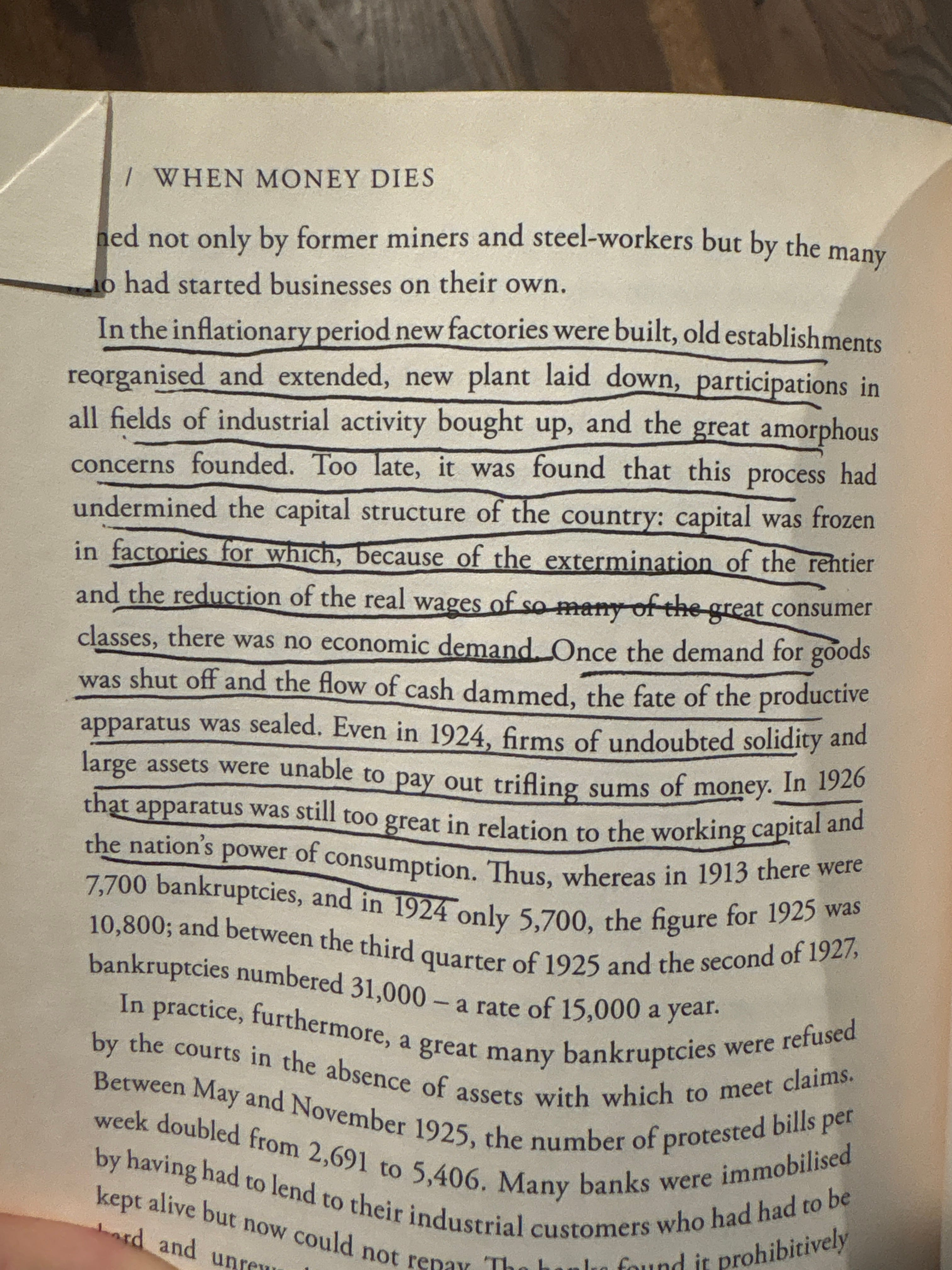
Sound familiar yet???
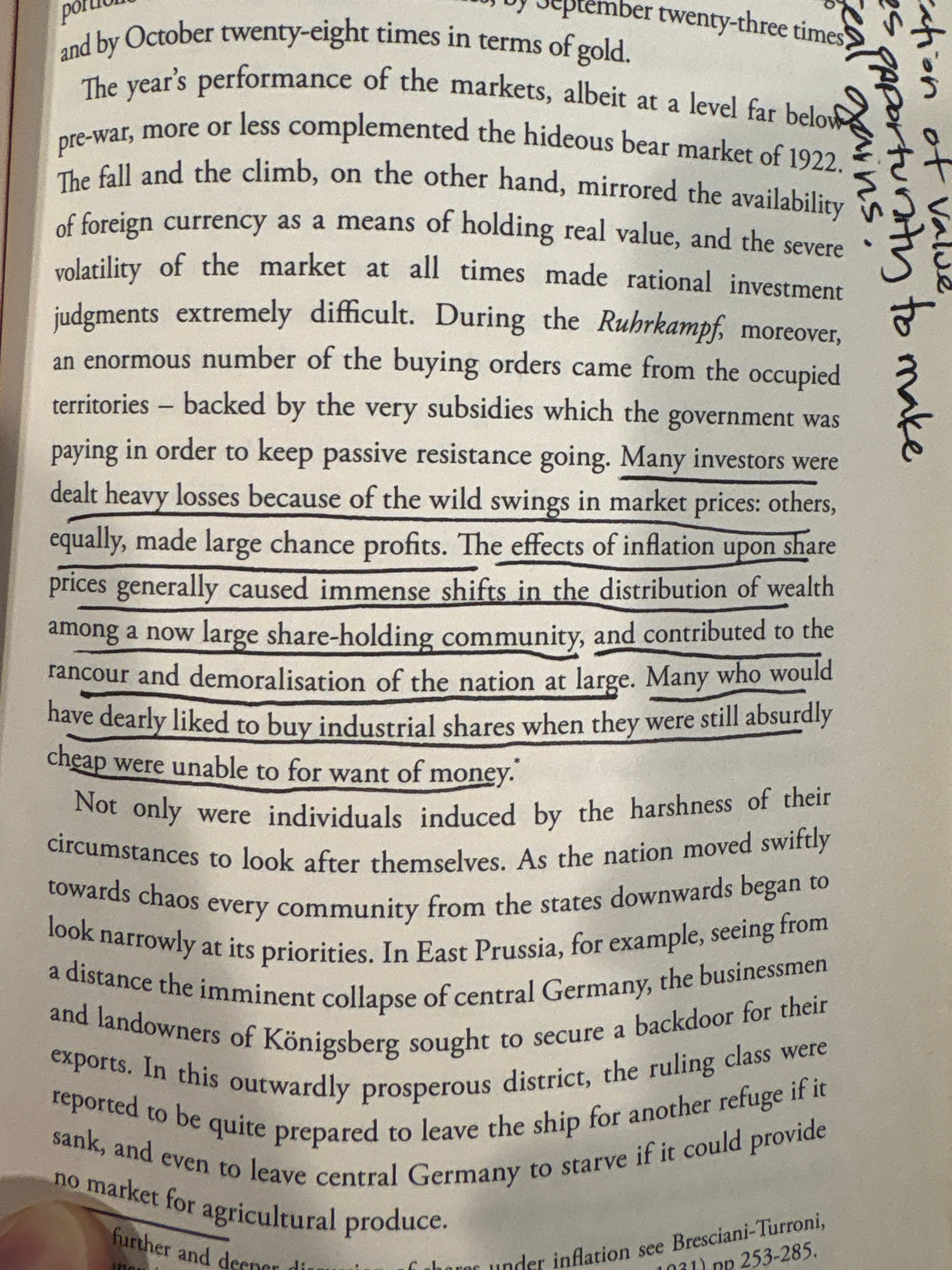
On Capital Controls:
Luke’s acknowledgement of Chinese bond yields falling and Yuan rising against the dollar is important for two reasons.
1. China owns the global supply chains through its Belt and Road Initiative (BRI). The US has finally realized what that means: inflation and control of the money supply.
2. Countries doing business with China need to hold their bonds (yields fall from purchases), and they need to trade in China’s currency, the Yuan. More demand = rising price. The flip side of the coin from what the US experienced for the better part of the last 80 years.
The capital control comments are important because, in my opinion, that’s what China’s Yuan Peg is. I wrote about it in October of last year. It’s their version, along with supply chains, to avoid Triffin’s Dilemma. In short, Triffin’s Dilemma is the structural tension of having your national currency serve as the world’s reserve currency.
This tension is what’s causing us to search for an answer, and the hope is that we can anchor a solution on Stablecoins. A point I’ve touched on for years, but one that Michael Every of Rabobank explains in detail with Grant Williams and Nik Bhatia, further lays out the case for in his Stablecoins as Statecraft for Bitcoin Policy Institute.
Demand is the key: A Lesson From Ray Dalio
As noted in the Chinese bond and Yuan example, demand is the key. Dalio points this out in his book The Changing World Order. This is noteworthy because demand is really all that matters in economics. If there is no demand, there is no price and no product, regardless of how much supply you put out.
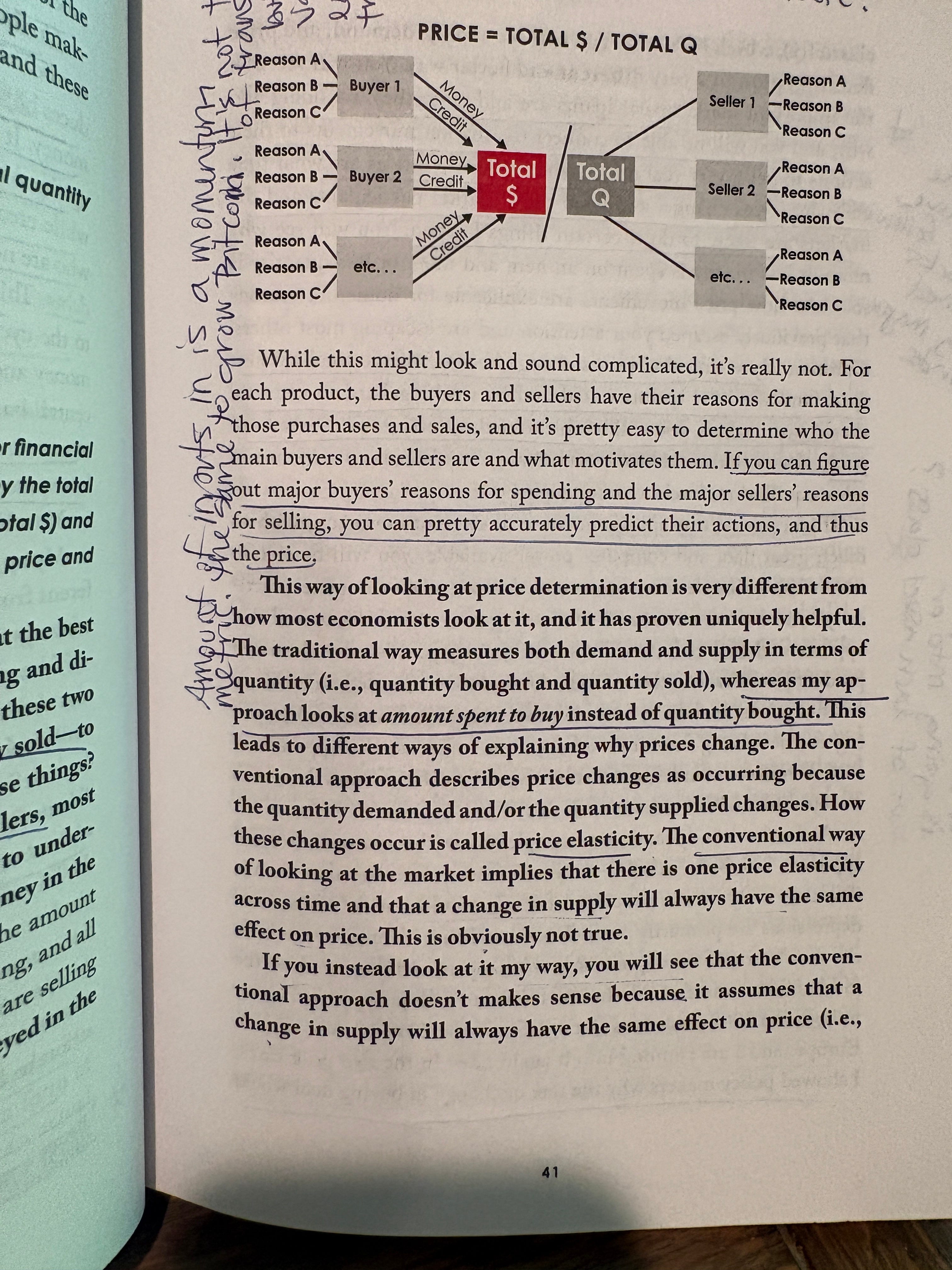
That’s the Achilles heel of our ailing Bretton Woods/Petrodollar system. And the lesson the FED/Treasury is determined to learn the hard way. As is, the supply of more money and the requirement of pointless arbitrage to move the oversupply are the primary problems with the monetary system. There are only two solves. First get a debit card. Second, spend less than you earn. You’ll never be able to roll yourself out of a debt problem. It’s that simple.
Mr. Warsh Goes to Washington:
This is the challenge that Kevin Warsh, along with Scott Bessent, will attempt to fix as they look to transition the system away from supply into stability, demand, and productivity.
When you’ve arbed out rates until nothing is left, there’s nowhere to go but up; without a) recreating the system b) starting fresh. Hence, why Warsh notes that Bitcoin, AI, and redefining what the FED is focused on and how the plumbing of the system works. He seems to get what is most important. Warsh alludes to all of these things and more in the video below. It’s worth more than one watch.
If you look at the past area of expertise of our Central Bankers you can understand the problem they’ll attempt to fix: Bernanke (depressions), Yellen (rates), Powell (M&A, corp. debt), and now Warsh (economic systems). That’s the only signal you need to know to understand what the concern is and what they’re coming to the FED to fix.
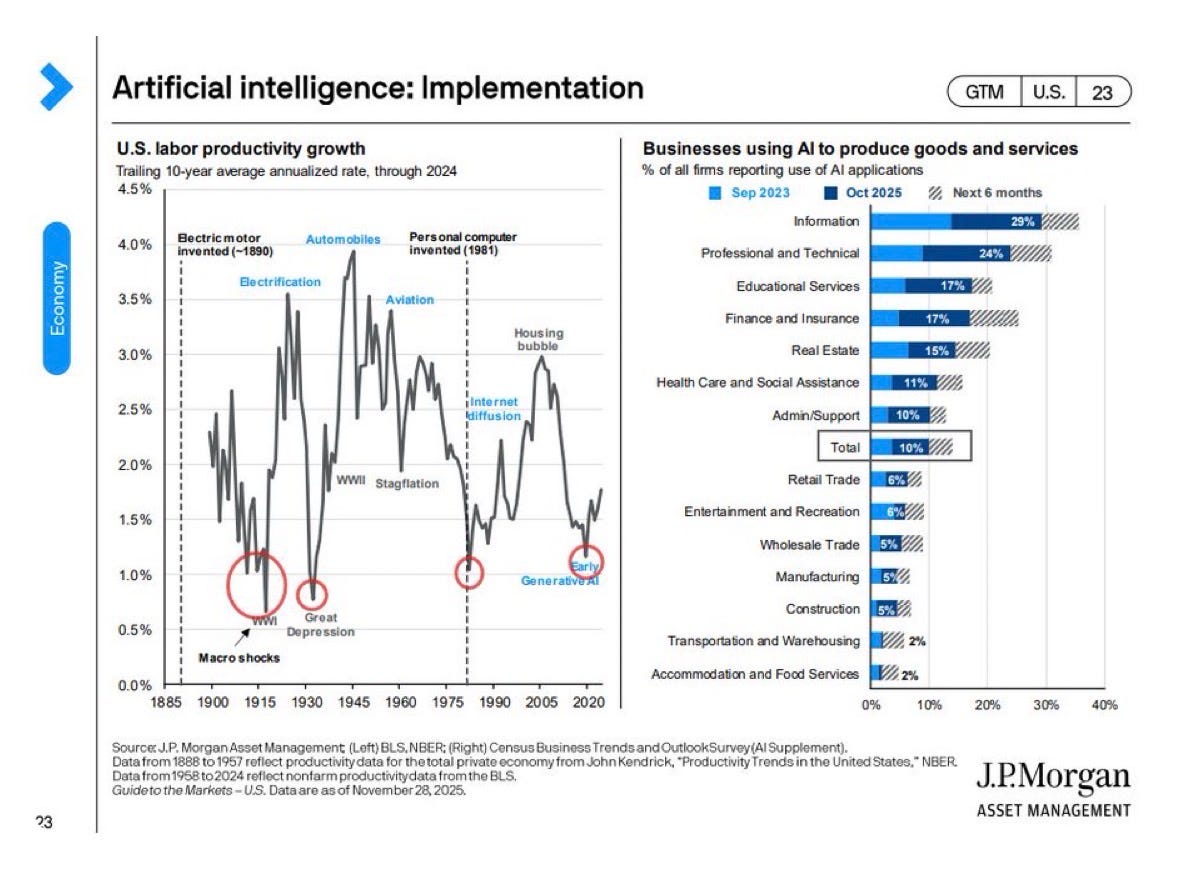
Warsh mentions both the lack of productivity and the positivity of AI. I’m personally not an AI-pocalypser. You can see why in the chart below from January’s JP Morgan Guide to the Markets. The US has rarely seen (only three other times) an equal or lesser productive labor force AND the introduction of groundbreaking technology. I circled these times to make it clearer.
Nik Bhatia’s Stablecoins as Statecraft:
Yes, the CLARITY Act and GENIUS Act are important in allowing banks to get involved in Bitcoin and Crypto. More importantly, they lay the legal foundations for TradFi to treat these nascent assets just the same as they do others. I’m talking to you Bitcoin Treasury Companies: fiat-style capital stacks, derivatives, leverage, and lending. Most importantly, stablecoins get reserves and Treasuries into the hands of stablecoin issuers. They then get dollars into the hands of the other 8B underconsumed individuals of the world. More critically, this helps the US fend off Triffin’s Dilemma in a backdoor way, similar to how China has with supply chains and the Yuan Peg. In this manner, dollars can be accessed but can’t be controlled like they were under LIBOR and the Eurodollar / Petrodollar system. This brings back stability and control of USD financial flows to the FED. A table from Nik’s work explains exactly how.
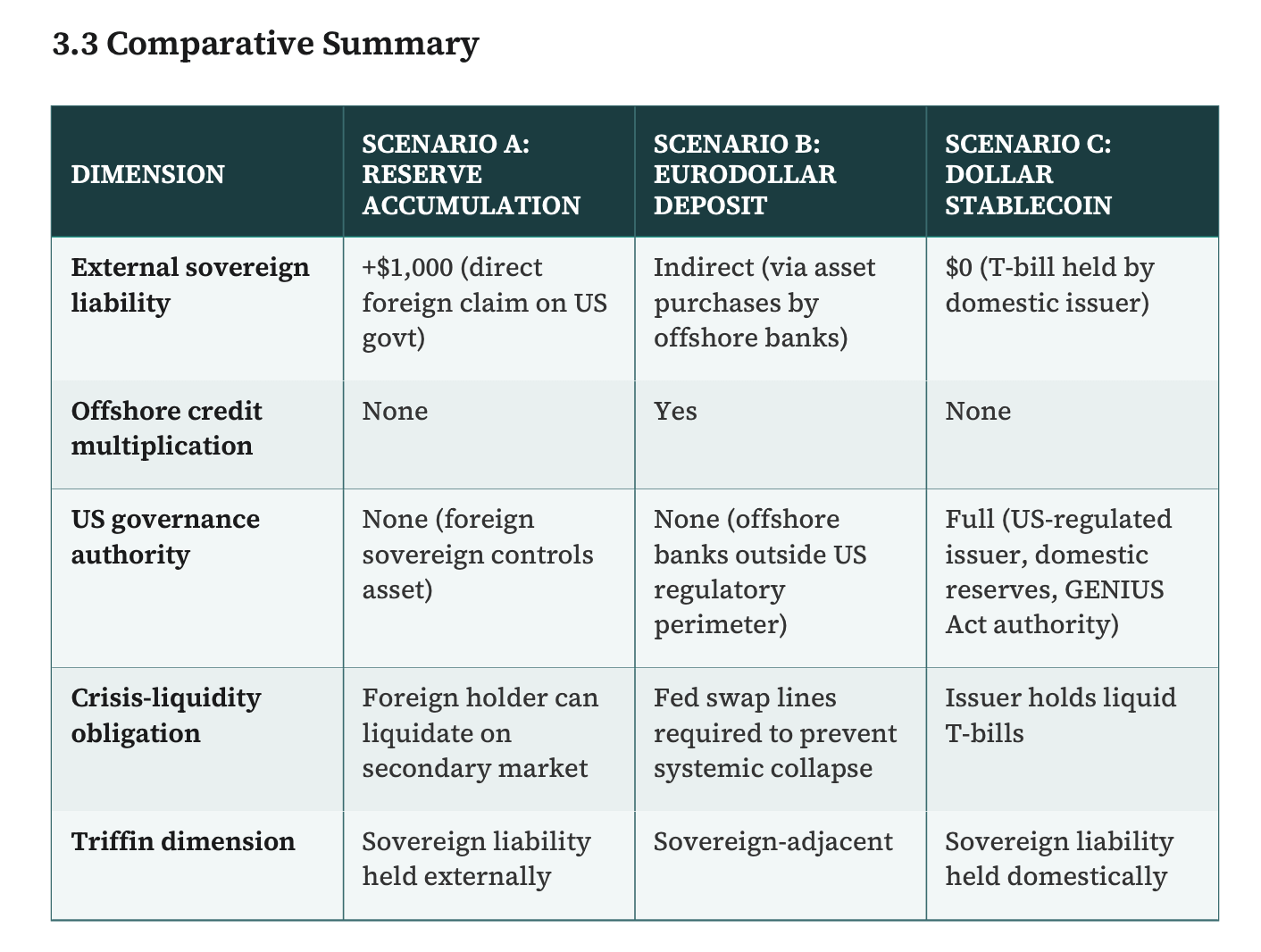
Image Source: Stablecoins as Statecraft: Reclaiming US Financial Sovereignty in the Eurodollar Market (p. 33)
When Mob’s Rule:
For those keeping score at home, I think the attempted assassinations of sitting President Trump are now at four or five. I’ve lost count. The point is not about the number; it’s that these are Mafia-style events. It’s how business is handled in the world of organized crime. At this point, it’s hard to avoid seeing what has become of our political relationships. It happens right out in the open for everyone to see.
It appears to be driven more by two conflicting families than by unrelated elected officials. More than anything else, my read on the Trump / Xi meeting is that it looks more like two Bosses meeting with their faction heads to settle disputes and redefine the turf. Hopefully, the outcome leads to us all moving forward peacefully and with less physical conflict in the future. This was my first thought when seeing the post below.

The Battle That Has Been Going on for Ages:
Alex Karp’s Technological Republic included a great image. One that actually explains most of the conflict that has happened, well… since… forever. To me, it explains what we call: East vs. West, Capitalism vs. Communism, Republican vs. Democrat. They are all nothing more than variations of the OG: Western Christianity vs. Orthodox Christianity and Islam.
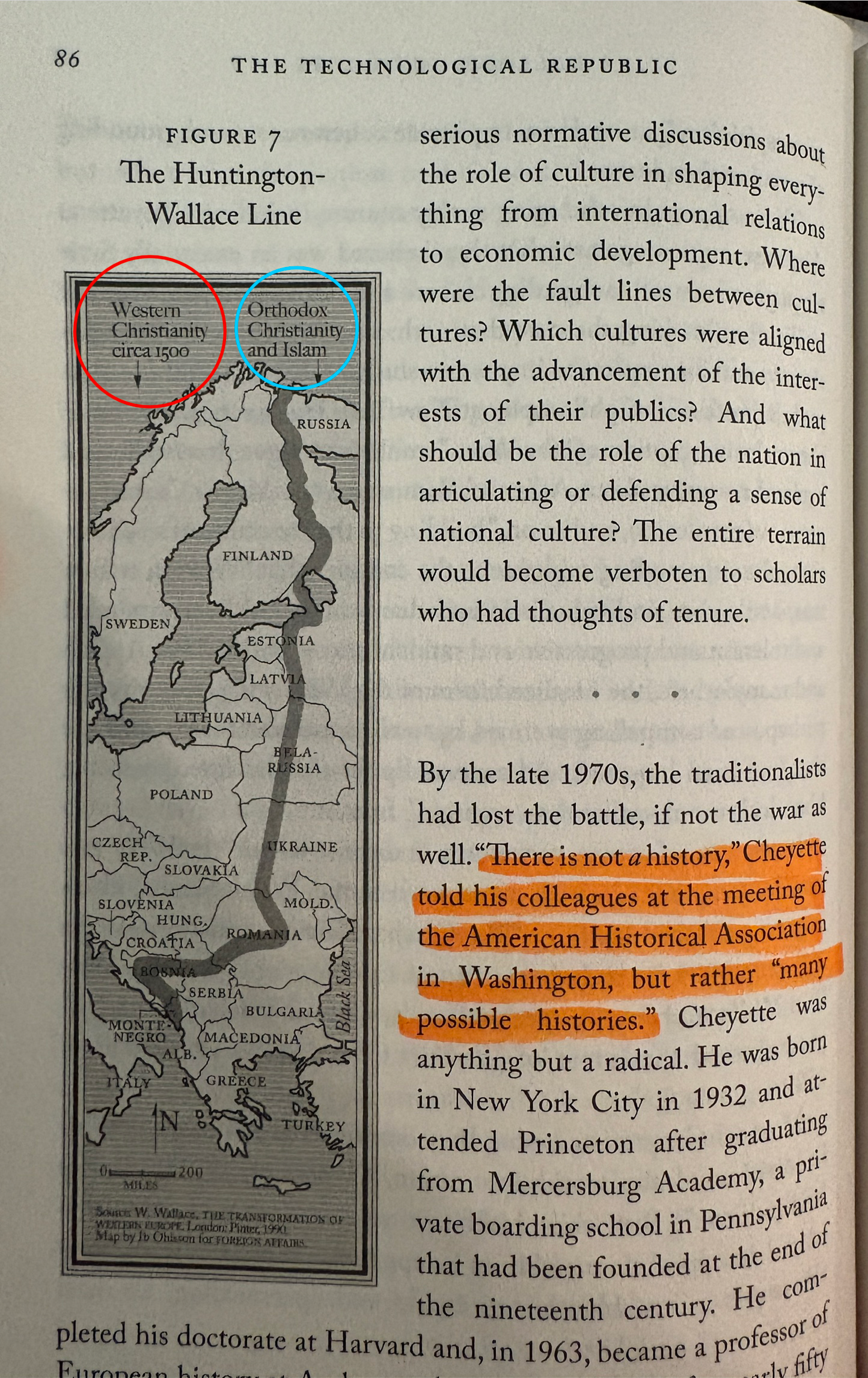
It’s a divide that runs deep and has lasted for thousands of years. That’s just where we are, again. Every 40 years or so, the world gets rewired. Most people don’t notice until it’s already done. These headlines are my evidence that we’re in the midst of one of those periods of rewiring now.