

So what is it with tariffs? Are they good? Are they bad, or are they necessary?
Admittedly, I’m not a tariff expert. It’s not a common tool in the Federal Reserve’s toolbox and I believe that is the big driver around tariff misconceptions. Since tariffs aren’t common nor are they widely understood, you can very easily spin a narrative in whichever direction you like.
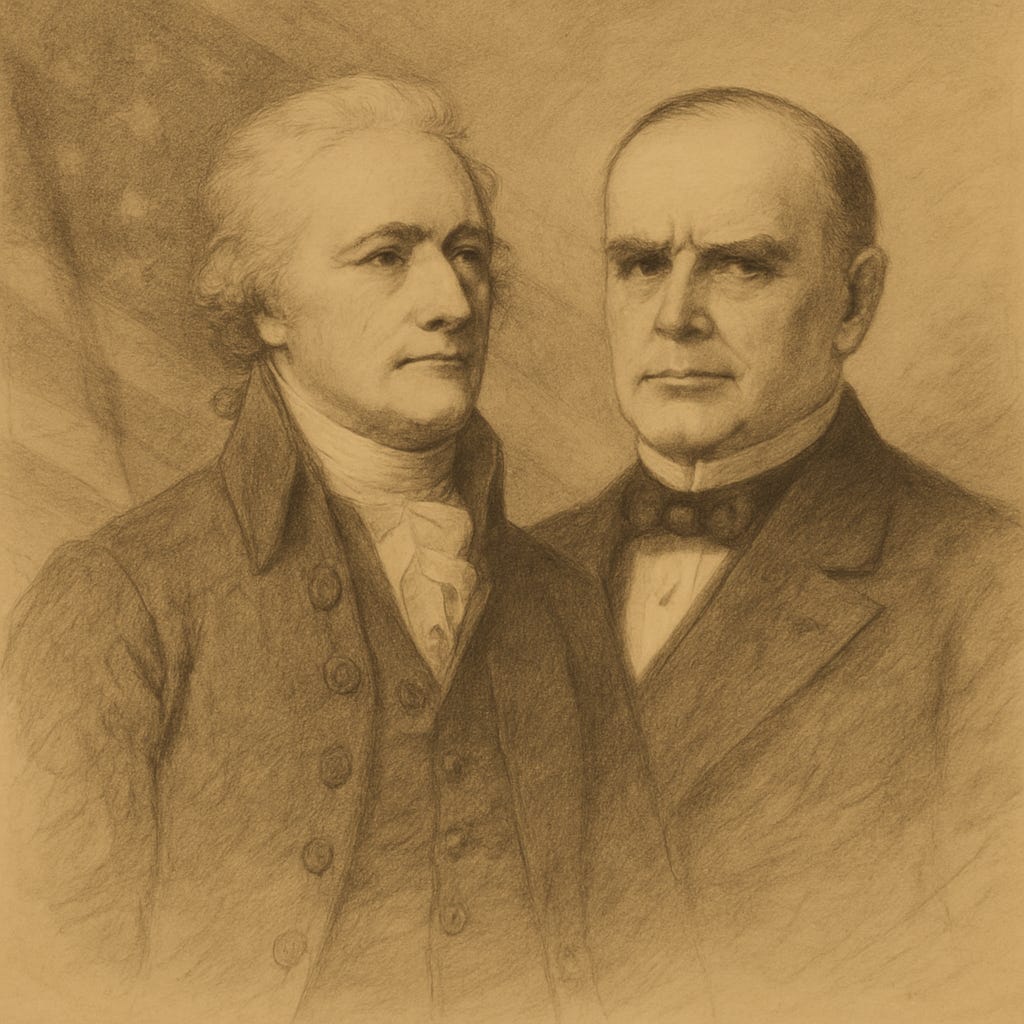
Of all the periods where tariffs were used, a few stick out to me as critical. Alexander Hamilton’s use in the founding of the American financial system and William McKinley’s use in establishing America as a force to be reckoned with for centuries to come.
Common Denominators in Tariff Use Cases
Both Hamilton and McKinley used tariffs to: protect and nurture domestic manufacturing, as a tool for building industrial strength, for job creation, economic independence, and for global power through productive capacity.
If we look at the problems facing America today we have:
Almost no manufacturing
Little industrial strength
Stagnant to waning job creation
Economically independent (as long as other countries by US Treasuries)
A globe power with declining productive capacity
In this light regardless of whether tariffs are painful or inflationary in the near-term, they have proven to fix all of these problems.
More specifically, they’ve succeed as a protection mechanism and put the US and its industrial base on the map several times. As long as Trump focuses on the use case, then it would make sense the medicine might be worth taking. At the moment, the US Government finds itself in quite the predicament. Its Federal Reserve is backed into a corner and countries around the globe are no longer kosher with owing debt that supports the addict-like consumption habits of American consumers.
Objective Framework for Strategic Tariff Use
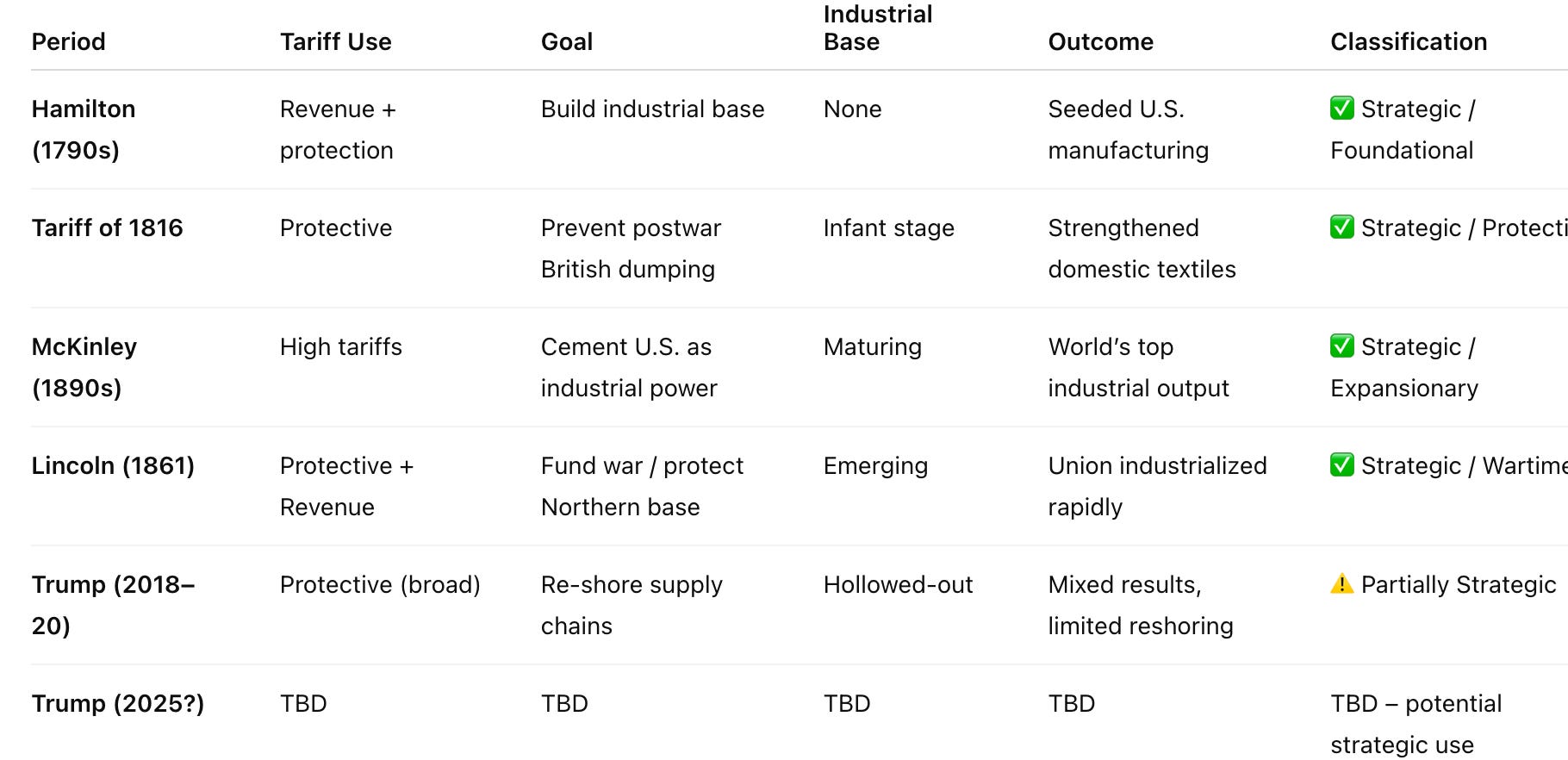
Yes, Smoot-Hawley was a bad use of tariffs. But, we need to look objectively at the case. In short, Smoot-Hawley was a reactionary use of tariffs at the wrong time. It worsened rather than solved a crisis.
Smoot-Hawley tariffs were enacted during a global economic collapse. At a time when demand was the issue, not foreign competition. It wasn’t about protecting jobs. Instead, they triggered international retaliation. Thus, collapsing global trade and deepening the Great Depression. Yes, Trump has to watch out for this. He could easily end up on this track. Especially with his knack for offending others.
In situations like this, turning to history for signal, is always a helpful endeavor. In doing so, I’ve found that though tariffs do cause some pain, when used strategically, they successfully put the United States on the map. Once by Alexander Hamilton and once by President William McKinley. One of those I had forgotten about until a recent interview by Treasury Secretary Scott Bessent.
Here, with Miranda Devine on Pod Force One, just before the two-minute mark, Bessent makes a very subtle but VERY important remark about Hamilton’s use.
Alexander Hamilton was the first Treasury Secretary. He was responsible for setting up the US financial system, and he chose tariffs for two main reasons:
Revenue: to finance the treasury
Protection: to protect nascent industry from the British and French. The US was young, weak, and in need of an industrial base
Roughly 236 years later, America finds itself in a very similar situation. Short of revenue, but as an old nation. We’re still leading the charge but weakened and in dire need of an industrial advantage again.
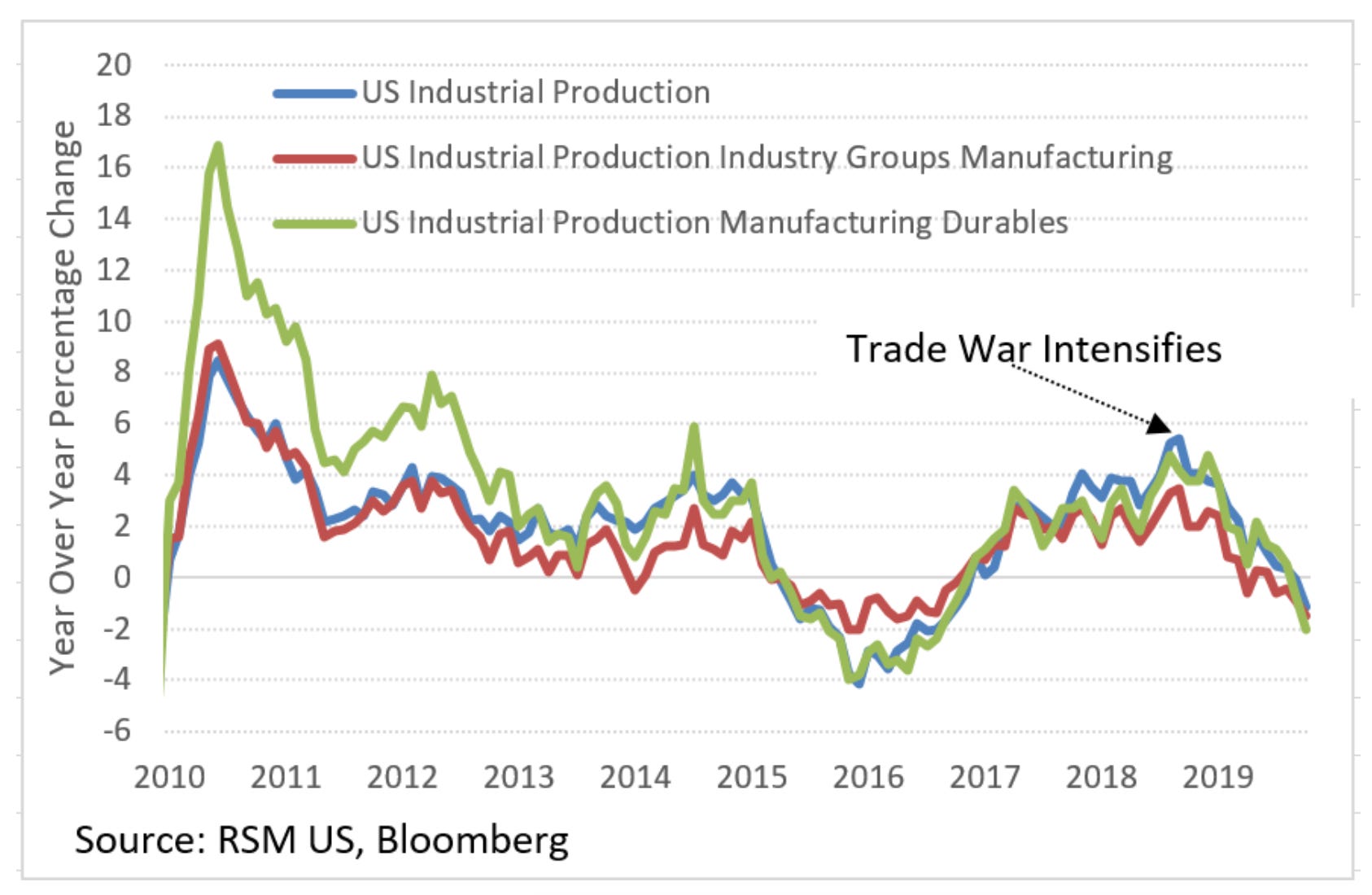
Why is an Industrial Base so Important?
Because, as we’re finding out, consumption isn’t productive and services can be undercut. Because the sheer nature of industrialization is rooted in productivity.
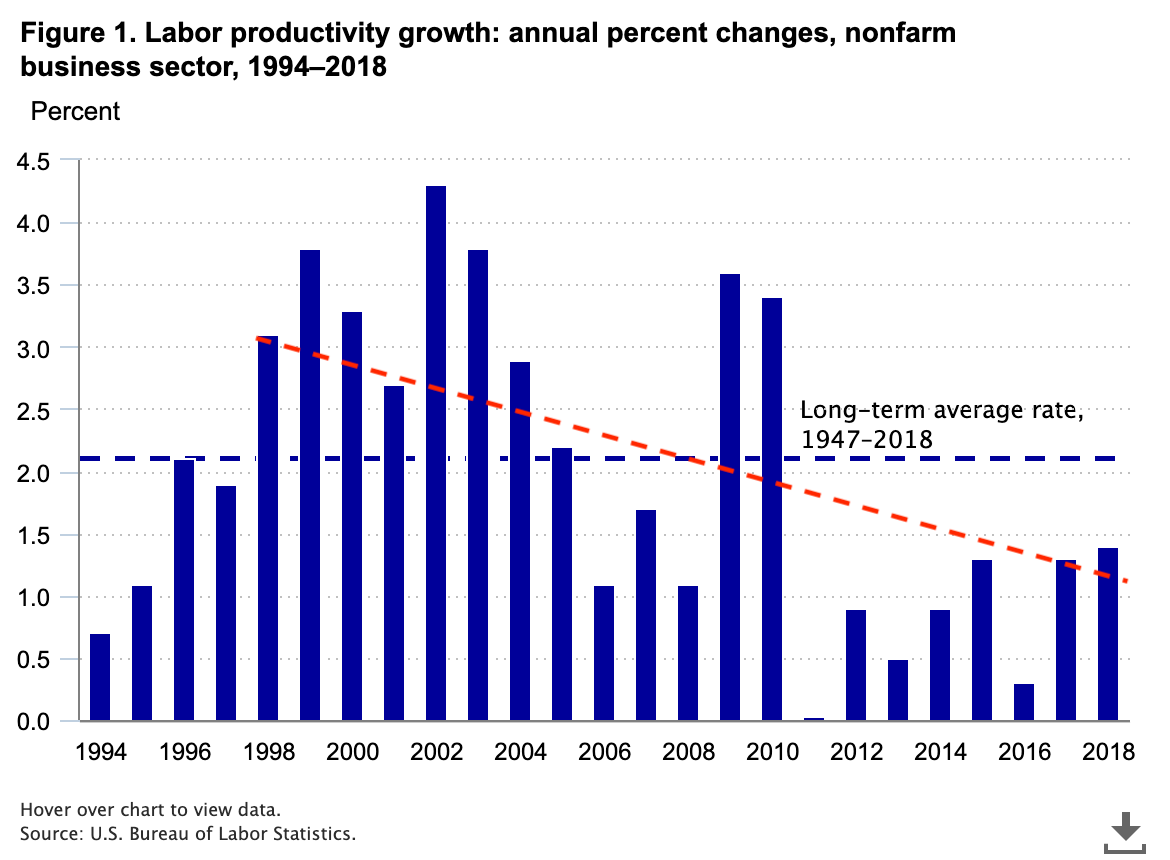
People around the world import things from productive societies.
Productive societies grow faster than unproductive ones.
At this juncture, America finds itself in the precarious position of being a leader in decline. Without an industrial base and the ability to produce much, other than its financially engineered products. Most of these decay with time, that’s their intended nature and a major problem.
While tariffs may not be a long-run solution, when used properly, they’ve shown the ability to right the ship in the past.
As Hamilton and McKinley showed, it can be done. That is my sense as to what appears to be the playbook for Bitcoin, Stablecoins, Bitcoin & Crypto Infrastructure as well as AI infrastructure. Because this is the industrial base of the next 100 years. This is what nation states are now fighting over.
These are the drivers that will be in demand by people and countries around the globe. That is what could make tariffs worth it. *IF*, that’s the angle we are playing.
Public Opinion Around Tariffs Under Hamilton, McKinley, and Trump
The following is a brief synopsis of levels of skepticism around tariffs under each. In these prompts with Grok, my goal was to try and best determine what was the real cause of the pushback and what was the real danger from use.
Under Hamilton: Used as a revenue builder but those facing drastic changes to industry (way of life) pushed back hard. It was the South/Agrarians vs. Industrialist. One’s opinion depended a lot on region.

Under McKinley: Fears were around price increases and opinions were primarily party dependent. Again, a meaningful revenue add and prospect for economic growth.
Under Trump: Shares the worst fears and angst of both Hamilton and Mckinely. Opinions are more largely media or corporately driven. Media narratives often obscure long-term intent of policy. Opinions tend to lean towards constituent base and stick to the party line rather than, “will this benefit America or not”. There is also a real risk that it has a negative global impact on trade. Narratives though less important, might matter now more than ever.

Summary of prompts: IMO, today, if feels like big corporations are driving the narrative for their own benefit rather than what might be right for the country.
Why? Because they know they’ve squeezed the American consumer as far as they can go. They sit on fat margins and if tariffs disrupt global supply chains and trade, it will hit their personal pocket more than anyone else’s.
In their eyes, there is no room to raise prices. Consumers will begin to stop buying. To combat, it’s easier to collude and create negative campaigns than to watch tools be used that might keep consumers from buying cheap junk and to start to want to be productive again.